
Exploring Vietnamese Coffee Culture on a Caffeine Lover’s Journey Through Vietnam

Vietnam doesn’t just drink coffee. It slows down for it, argues over it, sweetens it, pours it over ice, and somehow turns a tiny metal filter into a whole afternoon.
If you love caffeine, Vietnam feels like a playground with better stools. The coffee is bold, often made from robusta beans, and it carries a deep, roasted bite that can surprise anyone used to softer drip coffee back home. But the real magic isn’t only in the cup. It’s in the way people gather around it, from sidewalk cafés in Hanoi to riverside shops in the Mekong Delta.

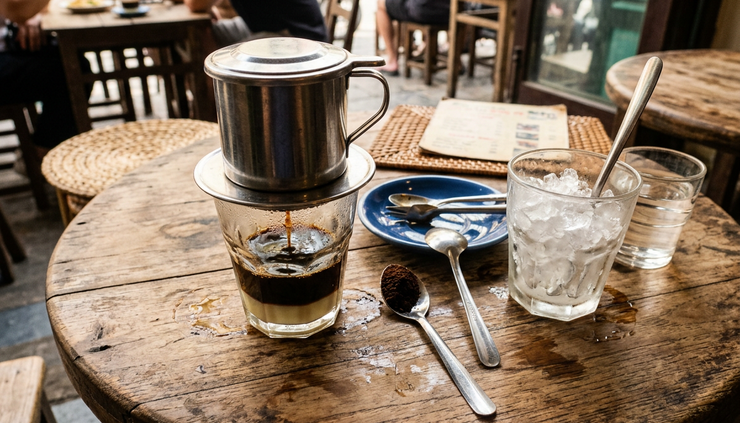
The first thing you notice is the phin, the small stainless-steel filter that sits on top of the glass like it has nowhere else to be. It doesn’t rush. Hot water seeps through dark grounds one drop at a time, landing slowly on a thick layer of sweetened condensed milk.
That slow drip changes the whole mood. You don’t grab a Vietnamese coffee and sprint out the door. You sit. You talk. You check the street. You let the drink become part of the day.
The classic order is cà phê sữa đá, iced coffee with condensed milk. It’s intense, sweet, and cold enough to cut through Vietnam’s humid afternoons. Stir it well, pour it over ice, and you get something closer to dessert than a regular morning coffee, but with enough caffeine to keep you very awake.
If you take it black, ask for cà phê đen. It’s strong and sharp, with that roasted edge robusta is known for. Some people love it right away. Others need a few cups to understand why it works.
Hanoi has a coffee rhythm all its own. The city’s cafés are often tucked into narrow buildings, hidden courtyards, and upstairs rooms that you might miss if you walk too fast. Some feel like a friend’s living room. Others look out over motorbike traffic, tangled wires, and the steady movement of the Old Quarter.
This is where many travelers try egg coffee, or cà phê trứng, for the first time. It sounds unusual until you taste it. Whipped egg yolk and condensed milk create a creamy, custard-like foam over strong coffee. The result is rich, warm, and comforting, almost like tiramisu in a cup.
Egg coffee is often linked with Hanoi, and it fits the city perfectly. It’s nostalgic, a little surprising, and better enjoyed slowly.

A good Hanoi coffee crawl doesn’t need a strict plan. Pick one café with a balcony, one tiny shop down an alley, and one place where locals are lingering over their phones or newspapers. That mix tells you more than any checklist.
Ho Chi Minh City, still often called Saigon, has a different coffee personality. The city moves faster, and its coffee scene follows along. You’ll find old-school street carts, sleek specialty cafés, and casual shops packed with students, friends, and remote workers.
Here, iced coffee rules. Cà phê sữa đá feels made for Saigon weather. It’s sweet, powerful, and served over enough ice to make the heat feel manageable.
You’ll also see modern variations everywhere. Coconut coffee, bạc xỉu, and blended coffee drinks show how flexible Vietnamese coffee can be.
A few favorites worth knowing:
Bạc xỉu A lighter, milkier coffee drink that’s great if full-strength robusta feels too intense.
Coconut coffee Often served icy and blended, with coconut cream or coconut milk giving it a smooth, tropical feel.
Salt coffee More common in central Vietnam but found in bigger cities too. A touch of salt brings out the sweetness and softens the bitterness.
Saigon is also a great place to compare old and new. Have one coffee from a street cart while sitting on a plastic stool, then try another from a minimalist café with single-origin beans. Both belong to the same story.
Travel through Huế, Đà Nẵng, or Hội An, and coffee takes on another layer. Central Vietnam has a slower, gentler pace in many places, and the cafés often match it. Think shaded courtyards, lantern-lit streets, river views, and afternoons that seem built for one more glass.
Huế is especially known for salt coffee, a drink that surprises people in the best way. Salt in coffee might sound strange, but it works like salt in caramel. It balances the sweetness, softens the bitterness, and makes the drink taste rounder.
In Hội An, coffee often becomes part of the scenery. You might drink it near yellow-walled buildings, along the river, or in a quiet garden café. The coffee matters, but so does the pause around it.

This is where the journey starts feeling less like a caffeine mission and more like a habit you’ll want to bring home. Order coffee. Sit longer than planned. Watch the street change.
A big part of the flavor comes from the beans. Vietnam is one of the world’s major coffee producers, and robusta plays a huge role. Compared with arabica, robusta usually tastes stronger, more bitter, and more earthy. It also has more caffeine.
That boldness is exactly why condensed milk works so well. The sweetness doesn’t hide the coffee. It stands up to it. The result is a drink with contrast: dark and sweet, bitter and creamy, intense and refreshing.
Roasting style matters too. Traditional Vietnamese coffee can have a dark, smoky flavor. Some blends may include notes that feel chocolatey or nutty. Modern specialty cafés are also playing with lighter roasts, arabica beans, and careful brewing methods, so there’s plenty of variety if you want to explore.
If you’re new to it, start with these:
Cà phê sữa đá for the classic iced experience.
Cà phê đen đá if you like strong black coffee over ice.
Cà phê trứng when you want something rich and cozy.
Bạc xỉu if you prefer more milk and less bitterness.
Salt coffee when you want something a little different.
The best approach is simple: follow the crowd, then trust your curiosity. If a sidewalk café is full of locals at 8 a.m., that’s a strong sign. If a tiny place has only two tables and a well-used phin, sit down. If the menu has a drink you’ve never seen before, ask for it.
A few easy tips help too:
Carry cash for smaller cafés and street stalls.
Expect sweetness unless you ask otherwise.
Don’t rush the phin. The waiting is part of it.
Try coffee at different times of day. Morning coffee and late-night coffee feel completely different.
Drink water too. Vietnamese coffee can be strong.
Vietnamese coffee culture isn’t something you fully understand from one cup. It builds as you move through the country. A sweet iced coffee in Saigon, egg coffee in Hanoi, salt coffee in Huế, a quiet cup by the river in Hội An, each one adds a new flavor to the trip.
And that’s the real joy of it. Vietnamese coffee isn’t just fuel. It’s a reason to sit down, look around, and let the country come to you one slow drip at a time.
Comments